
The Complete Cabinet Cleaning Guide
A smart way to refresh kitchen cabinets is to first understand what makes them dirty. Cooking splatter, airborne grease particles, and everyday dust slowly stick to cabinet surfaces until they become dull cabinets, sticky cabinets, or grimy cabinets. From my own experience, you do not need a hardware store visit or expensive cleaning agents near your kitchen sinks because Dawn dish soap is a budget-friendly solution for cleaning kitchen cabinets. It can cut through grease, tackle grime, and support easy grease removal. This cleaning guide explains a simple cabinet cleaning method for basic cleaning, greasy wood, and painted cabinets, so regular kitchen cleaning can leave naturally spotless cabinets.
Why Dawn Dish Soap Works Well for Cabinet Cleaning
Dawn dish soap is more than a normal cleaning product for dishes because its formula works like a strong grease fighter on kitchen surfaces. It helps cut through grease and lift grease without leaving a harsh residue, which makes it useful for greasy kitchen cabinets and everyday home cleaning. Compared with oil soap or harsh chemical sprays, it feels like a gentle cleaner for many cabinet finishes including painted cabinets and wood cabinets. Even with heavy grease buildup, it works well with a sponge, cloth, or microfiber cloth depending on your cleaning styles. This makes it a reliable cleaning solution for safe cabinet cleaning.
What You Need Before Starting Cabinet Cleaning
Before starting the cleaning process, keep your cabinet cleaning tools simple. You need Dawn dish soap, few drops, a bowl, warm water, non-abrasive kitchen sponge, soft microfiber cloth, soft cloth, spray bottle, diluted solution, clean paper towel, damp paper towel, and white vinegar for tougher buildup. This dish soap and water combination works well because a good cloth is highly absorbent and helps remove grease without too many cleaning agents. For simple cleaning, the main rule is to wipe gently, control water, and focus on proper drying.
Step-by-Step Method to Clean Greasy Kitchen Cabinets
Step 1: Test first. Before cleaning the entire cabinet, do testing on an inconspicuous corner. This smart habit protects the cabinet surface and checks whether the dish soap and water solution are safe for the cabinet finish, especially on painted cabinets or unfinished wood. Wait a minute or two for a damage check. If there is no issue, cleaning proceed can happen on the rest of the cabinet surfaces with better safe cleaning, surface testing, and finish protection.
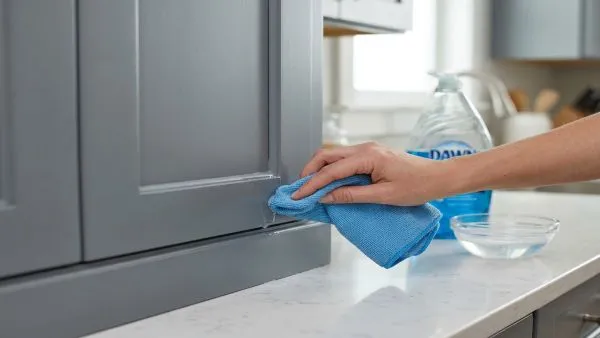
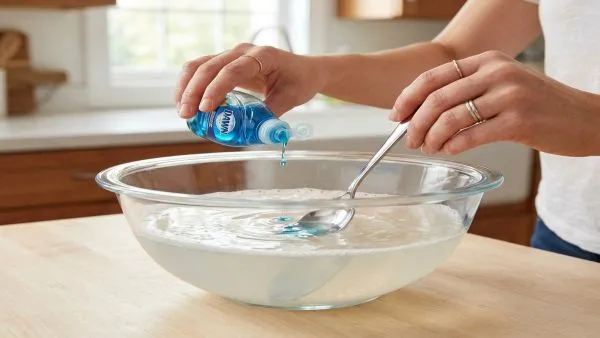
Step 2: Mix the solution. Take a bowl of warm water, add few drops of Dawn dish soap, and stir gently until you get a mild solution or soapy water mixture. Warm water helps loosen grease particles better than cold water during grease cleaning. You can also use the spray bottle method by mixing liquid soap with clean water in a bottle and giving a light mist to the cabinet surface. This water solution and soap mixture is enough for most jobs.
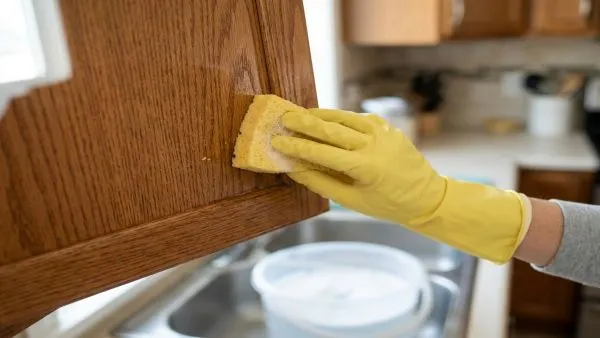
Step 3: Wipe with care. Dip the sponge into the soapy water mixture, squeeze out excess liquid, and use the soft side in gentle circular motions. For tougher grime, use light pressure but avoid abrasive scrubbing pads on finished surfaces. If there is noticeable gunk or buildup, a gentle scrub with a cloth or sponge can help. On a wood cabinet or wood cabinets, always follow the grain to avoid surface scratches while wiping down with a safe cleaning motion.
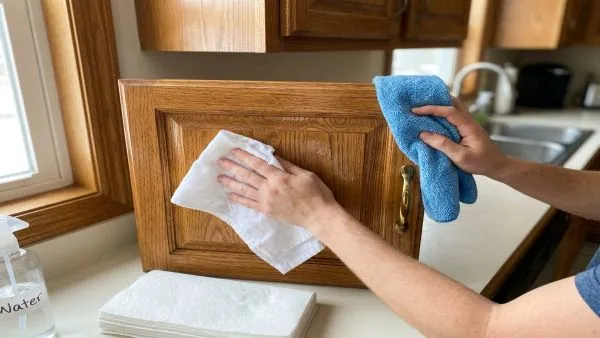
Step 4: Remove and dry. After the soil removed stage, wipe the cabinet surface again with a fresh cloth and clean water to clear soap residue. Then immediately dry all surfaces because extra moisture can cause swelling or finish damage on wood cabinets and painted cabinets. A clean paper towel, dry microfiber cloth, or lightly dampened cloth works well for this final step. It also gives proper residue removal and a safe drying method.
How to Handle Heavier Grease Buildup
When grease on kitchen cabinets is left to build up over time, you need a stronger approach. Grease buildup, cooking splatter, and airborne grease particles can create sticky cabinets, discolored cabinets, heavy buildup, kitchen cabinet grime, and layered grease. In these stubborn situations, do not scrub hard right away. A better cleaning approach is to soften the grease first and then wipe it slowly so the cabinet finish stays safe.
Using Dawn Power Wash for Stubborn Grease
Dawn Power Wash is a convenient option for stubborn grease because you can spray directly on cabinet surfaces with no mixing. It works well on heavy grease buildup, especially around hard-to-reach corners and edges. Let it sit for a minute or two, then use a cloth or sponge to wipe away grease and grime. After that, use a damp cloth to remove lingering soap. Clean with a light water mix, rinse, and dry surfaces so the cabinet cleaning stays safe.
Combining Dawn with White Vinegar
For greasy wood kitchen cabinets or heavy grime, mix Dawn dish soap with white vinegar, equal parts warm water, and few drops of soap in a spray bottle. This mix improves grease removal, especially on hardened grease. Use a soft cloth or sponge, apply to cabinet, and scrub gently. Always rinse thoroughly so no vinegar smell or soap residue remains. This stronger cleaning solution supports better grease cutting while keeping cabinet cleaning controlled.
Use a Non-Abrasive Sponge
A non-abrasive kitchen sponge is the safest tool for cleaning cabinets because it can absorb grease without scratching finish. On sleek wooden cabinets and painted surfaces, the wrong scrubbing tool can cause real harm. A soft cloth, sponge, Dawn, and warm water solution make an ideal combination to protect cabinets, keep clean cabinets, support gentle cleaning, and improve surface protection.
Cleaning Cabinets by Cabinet Type
Each cabinet type needs a slightly different method because kitchen cabinets are not all made the same. Greasy wood needs careful wood cabinet care, while painted cabinets need protection for the painted finish. A mild dish soap solution, good moisture control, and gentle cleaning can protect the cabinet surface. The best cleaning method depends on the cabinet material, but every type needs proper finish protection during cabinet cleaning.
Greasy Wood Kitchen Cabinets
Greasy wood is tricky because wood cabinets often have a porous surface that can absorb grease, moisture, and soap if not cleaned carefully. Use a minimal amount of soapy water, avoid soaking the cabinet surface, and wipe with a barely damp cloth or sponge. Always follow the grain and dry surfaces quickly. For unfinished wood cabinets, take extra caution because too much water can cause water damage, warp, or stain. Use little moisture, a dampened microfiber cloth, a drop or two of Dawn dish soap, and gently wipe away grease.
Painted Cabinet Care
Painted cabinets need a gentle touch because the paint finish on kitchen cabinets can become a dulled finish or lifted paint when exposed to harsh cleaning agents or abrasive scrubbing. A mild dish soap and water solution is better for cleaning cabinets with a painted finish. Keep light scrubbing, rinse with a damp cloth, and dry immediately. A microfiber cloth is helpful on painted surfaces because it is highly absorbent and gives good cabinet protection.
Keep Kitchen Surfaces Clean Longer
The best way to protect kitchen surfaces is to protect kitchen cabinets before grease hardens. Clean up immediately after cooking splatter or a spill because fresh grease is easier to remove grease from than hardened grease. Too much scrubbing can cause finish damage, so keep a spray bottle of diluted Dawn dish soap near the countertops for small spots before they become a larger problem. With regular cleaning, a quick wipe-down every week, and one full cleaning session, you can prevent grease buildup and save time and effort through simple routine care.
Towel Usage and Cabinet Protection
To protect cabinets, smart towel usage matters. For grease prevention on kitchen surfaces, use a microfiber cloth during cabinet cleaning, keep a separate drying towel, and try spray bottle cleaning for small areas. Avoid using too much oil soap on wood cabinets unless it is needed for special cabinet care. These pro tips improve cleaning convenience, reduce grease buildup, and support better surface protection.
Prevent Grease Around Kitchen Surfaces
During cooking, grease particles move through the air and settle on nearby surfaces, including cabinet surfaces, countertops, and the range hood. Use the kitchen exhaust fan when frying or sautéing because it reduces airborne grease particles before they land on cabinets. Good ventilation helps minimize grease on kitchen surfaces, supports grease prevention, reduces cooking residue, and delays a deep clean.
Use the Right Towel
The right towel makes cabinet cleaning safer. A microfiber cloth gives better grease pickup, grime removal, lint-free cleaning, and scratch-free cleaning. For drying, use a clean dry cloth or clean paper towel to remove remaining moisture. Avoid rough towels and worn-out towels because they may leave residue on freshly cleaned kitchen cabinets. Good towel usage improves cabinet surface care.
Make Cleaning Easier with a Spray Bottle
A spray bottle with Dawn dish soap and warm water makes kitchen cleaning easier. This pre-mixing solution helps maintain a clean kitchen without starting a big job every time. Just mist cabinet, let it loosen grease, then wipe with a soft cloth or sponge. It is useful for easy reach, upper cabinets, and the range area. For applying to cabinets, this convenient method keeps your cleaning solution ready for quick cleaning.
Should You Use Oil Soap on Cabinets?
Oil soap is often used for wood care, wood cabinets, and some wood types, but it can leave a greasy film if not thoroughly rinsed. For everyday cleaning tasks, Dawn dish soap with warm water is usually simpler cleaning, safer cleaning, and better for effective grease removal. It also supports residue-free cleaning when used lightly. For conditioning or restoring sheen, oil soap may help, but it should not be your regular routine grease-fighting tool for basic cabinet care.
Common Cabinet Cleaning Questions
Most common questions about cleaning kitchen cabinets are about Dawn safety, different cabinet types, greasy cabinets, cleaning frequency, and old grease. In most cases, dish soap and water solution work well on kitchen cabinet surfaces when used carefully. Good cabinet maintenance, steady grease removal, and a simple cleaning routine keep cabinets easier to manage.
Is Dawn Safe for Most Cabinet Types?
Dawn dish soap is usually a safe cleaner for kitchen cabinets, including painted cabinets, sealed wood cabinets, and laminate finishes, but testing on an inconspicuous corner is still important before cleaning the entire surface. With unfinished wood, keep moisture minimum for damage prevention. For most cabinet types, it is a reliable cleaner and gentle cleaning solution with good surface safety.
Fast Way to Clean Greasy Cabinets
For a quick clean, fill a spray bottle with dish soap and water because this is an efficient way to clean greasy kitchen cabinets in a hurry. Apply the spray solution to the cabinet surface, wait 30 seconds to 60 seconds, then wipe away grease with a soft cloth or sponge. For stubborn spots, use a gentle scrub with a non-abrasive kitchen sponge and extra soap. This supports fast cleaning for tough grime.
How Often Cabinets Should Be Cleaned
A light wipe-down of kitchen cabinet surfaces should be done once a week, especially near the stove or range where cooking splatter and common grease appear more often. A thorough cabinet cleaning should include backs, corners, and interior shelves about once a month. This cleaning routine prevents heavy grease, stops accumulating grease, and gives faster cleaning, easier cleaning, and a better maintenance schedule.
Removing Old Grease with Dawn
One of the strongest qualities of Dawn dish soap is its ability to cut through grease, even old grease and hardened grease. Let the soapy water solution sit on the cabinet surface for a few minutes before scrubbing so it can penetrate buildup and loosen buildup. In stubborn cases, use Dawn Power Wash or add a splash of white vinegar to the mix to speed up process and clean greasy kitchen cabinets with less effort and better grease removal.
Keeping Cabinets Fresh Year Round
For steady kitchen cleaning, Dawn dish soap is an effective tool and accessible cleaner for grease, grime, and everyday kitchen messes on cabinet surfaces. It works on sleek wooden cabinets, painted cabinets, and heavily greasy surfaces near the stove area when used with warm water, liquid soap, cloth, and sponge. A consistent cleaning routine keeps each cabinet top shape through consistency. Clean up immediately after cooking, wipe down kitchen surfaces, and do a deep scrub once a month. With this go-to cleaning solution, you can keep clean cabinets, fresh cabinets, and grease-free cabinets all year round.